


[Research note]
Lonely by design

[ Title ]
Lonely by design
How social media and AI companions reshape adolescent belonging
By Tan Heang-Lee and Farah Nabilah
[ Foreword ]
“What loneliness is more lonely than distrust?” that is the question George Eliot poses in Middlemarch, which remains salient even today.
Loneliness is part of the human condition, that universal ache of longing to be known, yet fearing that we never quite will be. The digital age has amplified that ache through its affordance of exposure without intimacy, where one can be viewed without being seen, all while changing the structural conditions under which trust forms.
Adolescents everywhere today, including in Malaysia, are the most digitally connected generation in history. They are available around the clock, reachable to more people than ever before, with their lives on display for all to see. And yet, loneliness among their cohort is rising – characterised by a sense of being unseen, misunderstood, and profoundly alone.
This sense of loneliness amidst connection is not a paradox. Rather, it is a fundamental consequence of platform design which optimises for engagement in a way that makes vulnerability feel riskier than ever before. On social media, we do not simply communicate. We perform. Every post, every image, every carefully worded caption is an act of self-curation offered to an audience of sometimes complete strangers for validation.
But when everyone is performing, connection gives way to comparison. And when the performance falters, judgement follows, fuelling insecurity and distrust. The result is attention without affection, engagement without intimacy, and followers without belonging.
AI companions, despite their relative novelty, take loneliness to unprecedented depths. They promise connection without risk, and companionship that neither judges nor disappoints. For an adolescent struggling with social anxiety, this may certainly feel like relief. But it comes at a cost. When we avoid the friction of real relationships, we also forgo their joys and increasingly forget what it means to be human – to live as a member of a community.
In this sense, Eliot’s question has never felt more urgent. This research note takes up her call by asking how we can make technology safer for young Malaysians, and help them connect in ways that foster trust and belonging.
Datuk Prof Dr Mohd Faiz Abdullah
Executive Chairman
[ Executive Summary ]
- Despite growing public concern around adolescent wellbeing, there is a lack of attention towards the connection between loneliness and technology.
- Malaysian secondary school students increasingly report persistent loneliness: the top factor linked to depressive symptoms among their cohort. Loneliness also potentially contributes to behavioural issues and even violence among adolescents.
- For adolescents today, finding acceptance and belonging has become more fraught due to social media, which exponentially raises the stakes of social missteps. Social media’s shift away from encouraging interactions among friends towards feeding users with content from strangers further exacerbates social disconnection. This content-first approach, coupled with addictive design choices, promotes compulsive and passive consumption – precisely the kind of social media use that contributes to loneliness. However, even active use is increasingly linked to loneliness.
- The harms of artificial intelligence companionship are concentrated among heavy users and those with less social support, who are more likely to report loneliness when using AI companions. Other usage patterns linked to poor wellbeing include perceiving chatbots as friends and confiding in them, which are facilitated by deliberate design choices.
- To promote social connection, it is crucial to protect children from addictive design features as well as encourage time and space for play.
- Recommendations include enforcing provisions on manipulative design features, extending school recess and providing green spaces in neighbourhoods.
[ 1. Introduction ]
School children today are struggling. In response, policymakers and members of the public alike have pointed to the impact of social media on adolescent mental health. These concerns around adolescent wellbeing are reflected most prominently in the upcoming social media ban for children below 16.
But these conversations are missing a crucial puzzle piece: loneliness.
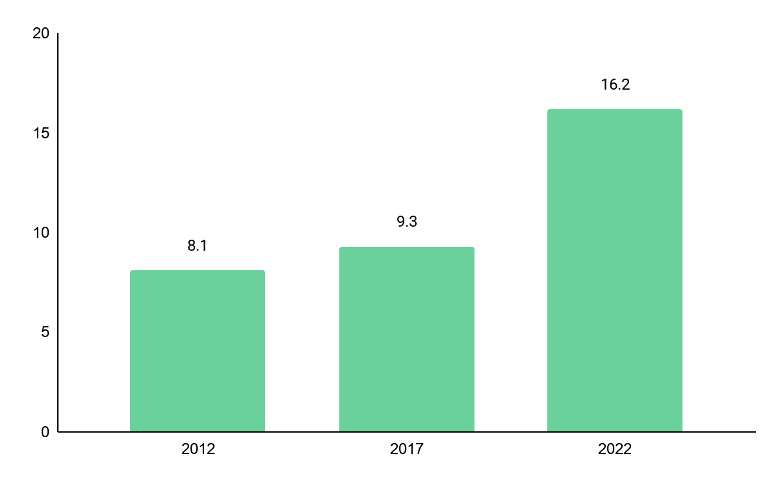
Loneliness is “the painful feeling that arises from a gap between desired and actual social connections”.1 The National Health and Morbidity Survey 2022 found that one in six Malaysian secondary school students reported persistent loneliness: double the proportion recorded a decade earlier.2 This rise in loneliness coincided with the Covid-19 pandemic’s onset, when a generation of children spent their formative years isolated at home, learning and engaging through screens. Even with the pandemic behind us, its impacts on social development may linger.
Since the survey was conducted, further complications have emerged. These include not just more pervasive social media usage, but also the widespread availability of artificial intelligence (AI) in both the underlying algorithms powering these platforms and novel forms of engagement, namely AI companions.
Fig. 1: Percentage of Malaysian adolescents feeling lonely most of the time or always in the past year, 2012–223
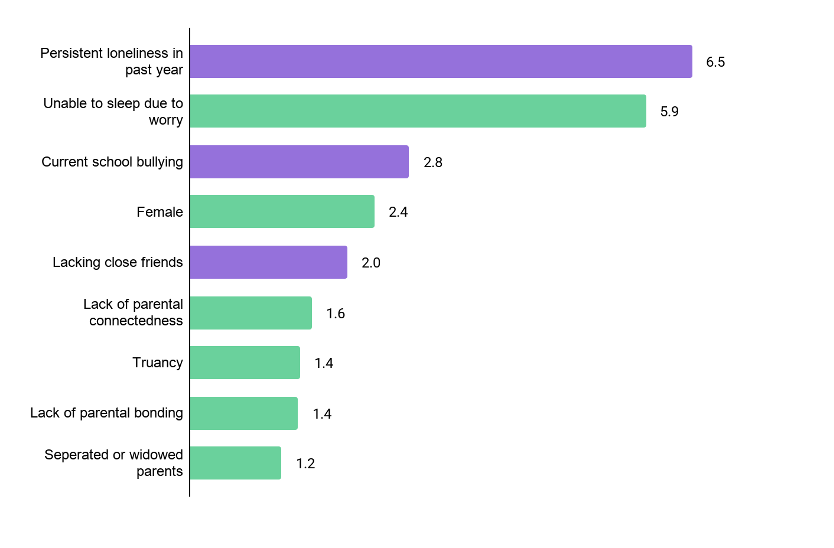
In a 2025 study of over 33,000 Malaysian secondary school students, loneliness was the top factor linked to depressive symptoms, with lonely students being 6.5 times more likely to report these symptoms.4,a Notably, three of the top five factors linked to depressive symptoms involve peer relationships (loneliness, school bullying and lacking close friends). In this light, what is missing from discussions around adolescent mental health, and how should we design prevention strategies? Discussing mental health without considering its relational underpinnings risks over-medicalisation, that is, framing mental illness as an individual medical condition and prioritising clinical interventions over more systemic approaches. Since mental health is relationally driven, we need to pay attention to social health more broadly.
Fig. 2: Factors linked to higher odds of depressive symptoms among Malaysian adolescents5
Beyond its impacts on mental health, loneliness also harms physical health. A review of 90 studies covering over two million people found that lonely individuals were 14% more likely to die prematurely.6 In comparative terms, the physical effects of loneliness are equivalent to the harm caused by smoking 15 cigarettes a day.7 Like physical threats, social threats such as isolation and rejection can trigger fight-or-flight responses, putting the body under stress.8
By heightening sensitivity to social threats, loneliness can paradoxically fuel antisocial behaviours, resulting in a vicious cycle. Chronic loneliness alters how the brain processes social information, making a person more likely to interpret negative intent, anticipate rejection and respond defensively – actions which, in turn, push others away.9 This can contribute to behavioural issues and even violence among adolescents, where lonely youth are more likely to fight with peers.10
At a broader scale, loneliness can fray the social fabric, since social connection provides the foundation for social cohesion. If loneliness is rampant among our communities, people may be more likely to mistrust and assume the worst of others, thus fuelling social conflict.
For adolescents today, finding acceptance and belonging – arguably the defining challenge of growing up – has become more fraught because of social media. Adolescence is a time of learning social skills through trial-and-error, where making mistakes is part of learning. But social media’s features, particularly its ability to broadcast content to a wider audience than one’s immediate peer groups, has exponentially raised the stakes of social missteps. Awkward or embarrassing moments may turn into viral posts, inviting a torrent of vicious comments. This possibility can contribute to a fear of judgement and lack of emotional safety, even among peers.
Growing up in a digital world marks a stark contrast to a childhood centred around free play, which once provided children with a low-stakes practice ground for making friends. In The Anxious Generation, social psychologist Jonathan Haidt argues that the shift away from a “play-based childhood” to a “phone-based childhood” has fuelled the current mental health crisis among adolescents. In a play-based childhood, children spend most of their free time playing with friends in person.11 Such free play is child-led, unstructured, imaginative and, importantly, low-stakes.12 It is possible to take risks, fall down and bounce back, while gradually building social competence and confidence.13 Free play provides space for children to create rules without adult involvement, enabling them to practise negotiation, navigating peer hierarchies and handling conflict: all crucial skills for handling the transition to adulthood.14 But as childhood moves online, children increasingly lose opportunities to build the foundational social and emotional skills that foster in-person social connection. The rise of AI tools, particularly AI companions, may further complicate social development.
This research note examines how social media and AI companions contribute to loneliness among young people, and concludes with preliminary recommendations to promote social connection and safer technology. Drawing upon local and global evidence as well as several expert consultations, this note is a precursor to further qualitative research with youth.
[ 2. Social media ]
2.1 How does social media design lead to passive and compulsive consumption?
Social media has arguably become anti-social. Over the years, platforms have shifted away from encouraging interactions among friends (friend-first) to feeding users with content from strangers (content-first). In 2025, Instagram users spent only 7% of usage time viewing content from friends, decreasing from 11% in 2023.15 In this light, social media is a misnomer, and it should be more accurately called highly addictive entertainment.
Content-first social media is especially addictive because algorithms are optimised to find the most entertaining and attention-grabbing content from a vast pool of content creators, many of whom are professionals. These algorithms also predict how long users view content, therefore increasing screen time and contributing towards passive consumption. Indeed, regular users are posting less often on social media. There are fewer rewards for doing so, given the decreased likelihood of even engaging one’s friends. In the United Kingdom (UK), the percentage of adult social media users who actively post, share or comment dropped from 61% in 2024 to 49% in 2025.16
Alongside algorithmic feeds, social media also encourages compulsion through a range of addictive design choices – such as personalised content, infinite scrolling, autoplay for video content, push notifications and social reward loops (such as “likes”) – all of which exploit cognitive vulnerabilities for increased profit. In a landmark case, a Los Angeles court found Meta and YouTube liable for intentionally using addictive design choices that harmed a teenage girl’s mental health.17
In short, the move from friend-first to content-first approaches, coupled with addictive design choices, promotes both compulsive and passive consumption on social media. This is precisely the kind of social media use that directly contributes to loneliness.
2.2 What does global evidence say about social media use and loneliness?
To examine the impact of social media on loneliness, we need to distinguish between types of social media use (active versus passive, general versus compulsive) and understand the relational context in which social media is used. Adolescents’ online and offline worlds are interconnected, where pre-existing relationships shape the way they use social media and its subsequent impacts on their wellbeing.
Research shows that compulsive and passive social media use is linked to loneliness. A 2022 review of 82 studies, spanning over 48,000 participants, found that problematic and passive social media use was associated with increased loneliness.18 As for general and active social media use, the relationship is more complex and nuanced. The same review found no link with loneliness,19 whereas other research found that such use actually supports social connection.20
For adolescents, the quality of pre-existing relationships appears to shape the extent to which they benefit from active social media use. In a Dutch study that followed 1,211 adolescents from 2016 to 2018, those with strong friendships were more likely to use social media actively (for example, sharing updates about themselves and engaging with peers), which helped maintain these relationships over time. In contrast, those with weak friendships were less likely to use social media to actively engage peers, and remained with weak friendships by the end of the study.21
However, more recent, albeit adult-focused, research contradicts more positive interpretations. In a 2024 study tracking nearly 7,000 Dutch adults over nine years, both active and passive social media use predicted increased loneliness over time. To explain this counterintuitive finding, the researchers suggest that active engagement on social media may not be as satisfying as users expect, leading to disappointment.22
What happens when young people limit their social media use? At Iowa State University, researchers randomly assigned 230 undergraduate students to two experimental conditions: either they limit social media use to 30 minutes a day, or use social media as usual. After two weeks, those with limited use reported decreased loneliness, anxiety, depression and fear of missing out. This study thus suggests a causal link between social media use and loneliness, and further highlights that limiting social media may still improve wellbeing, while being more feasible than abstaining altogether.23
2.3 What does Malaysian research say about social media use and loneliness?
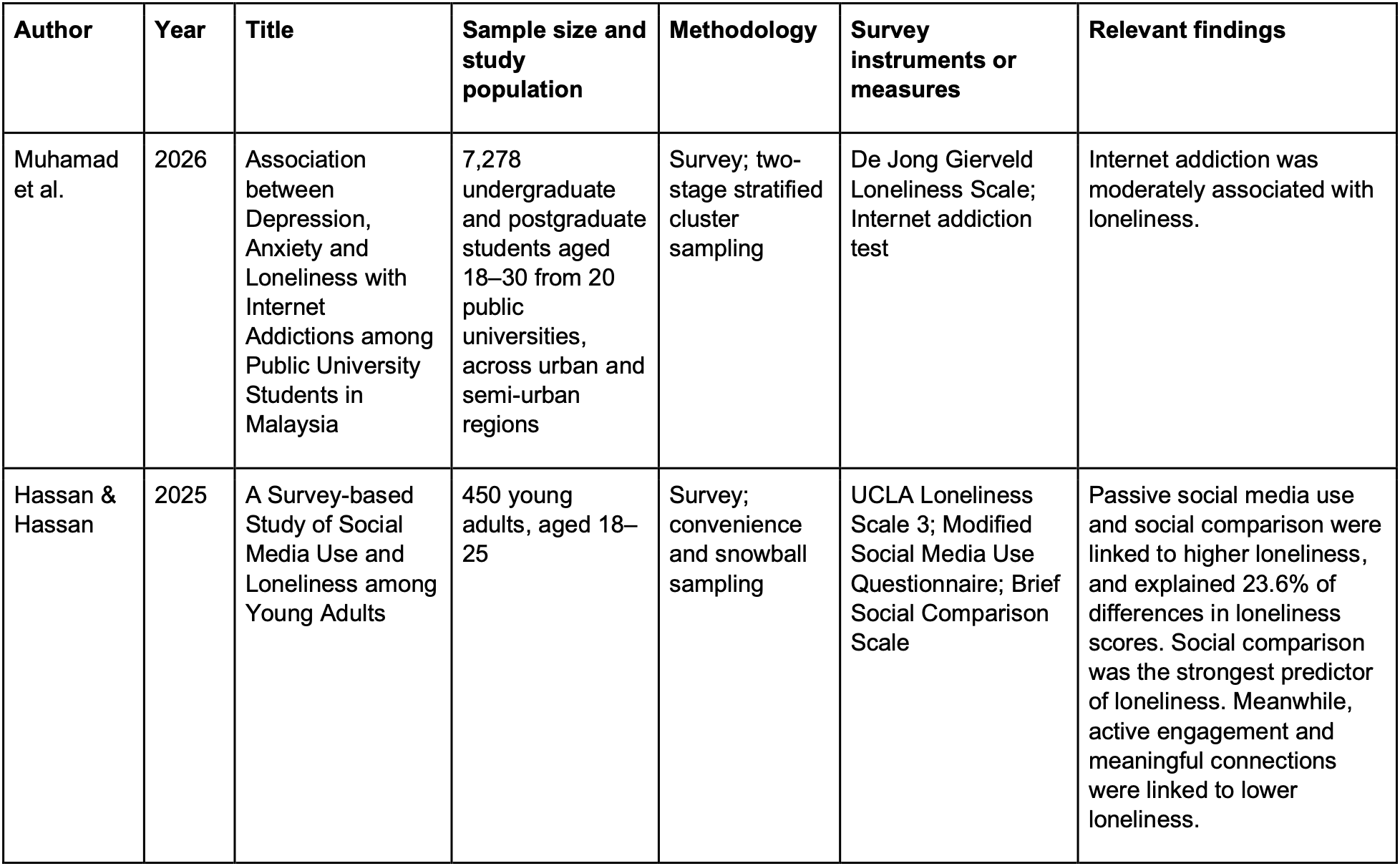
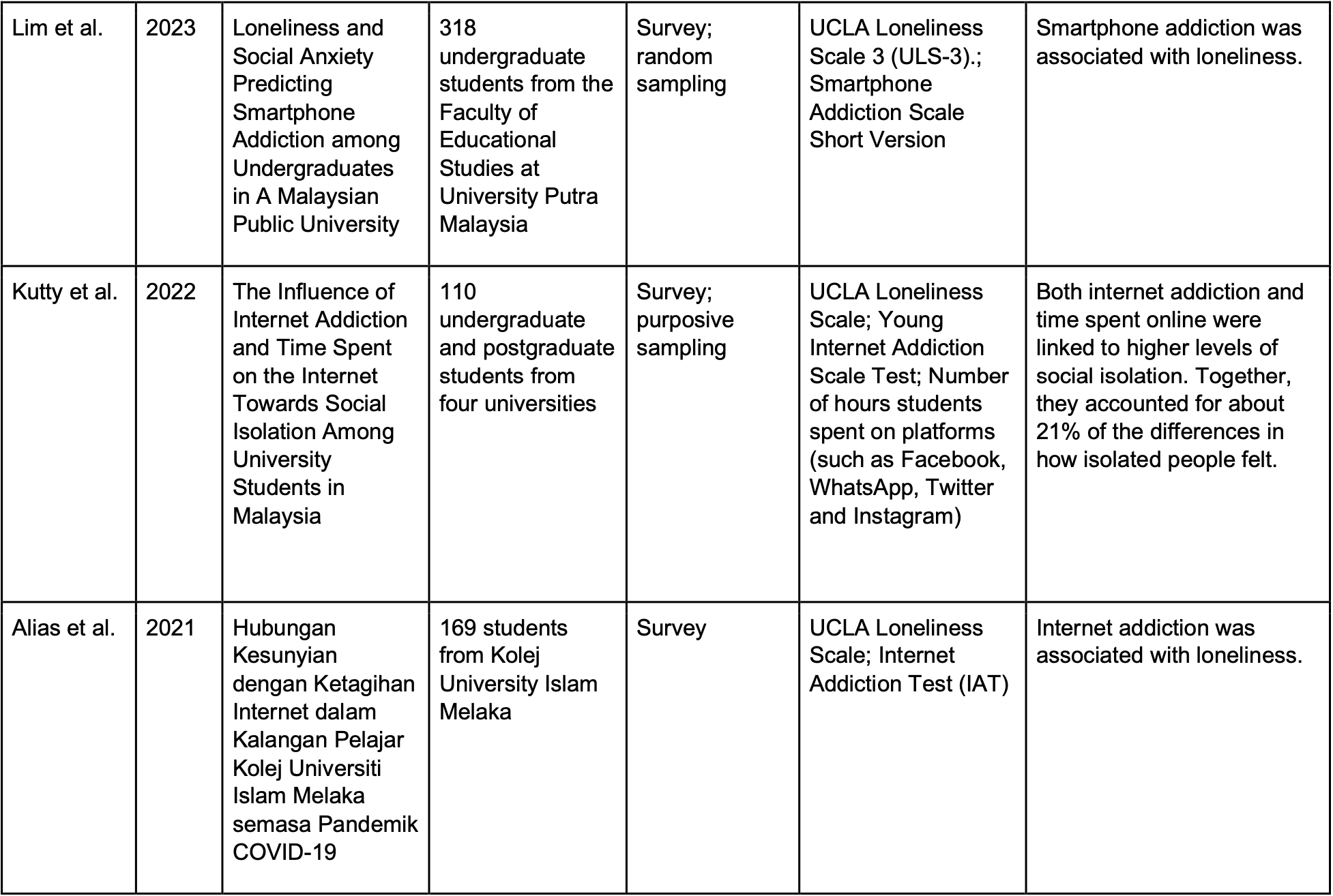
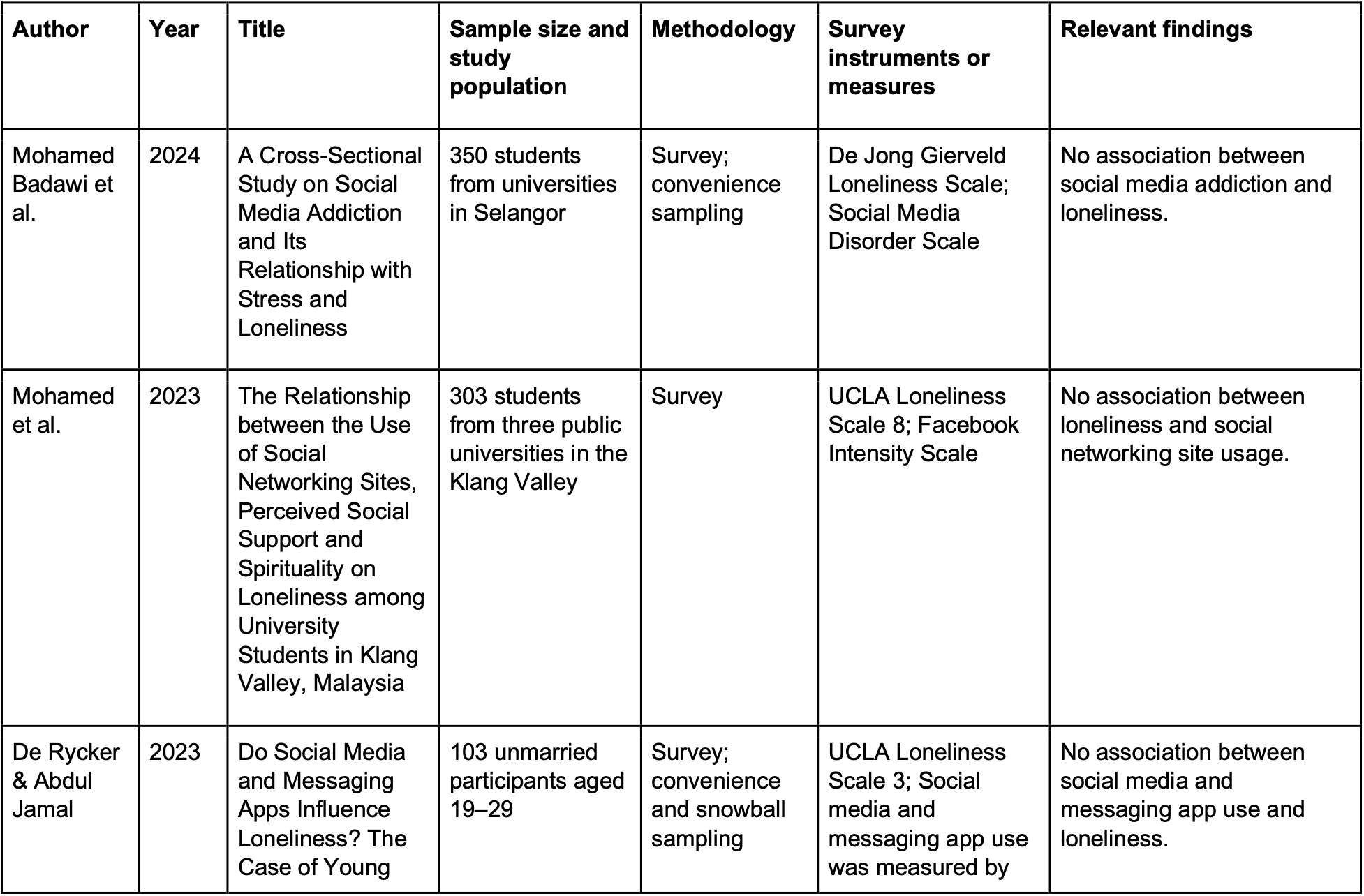
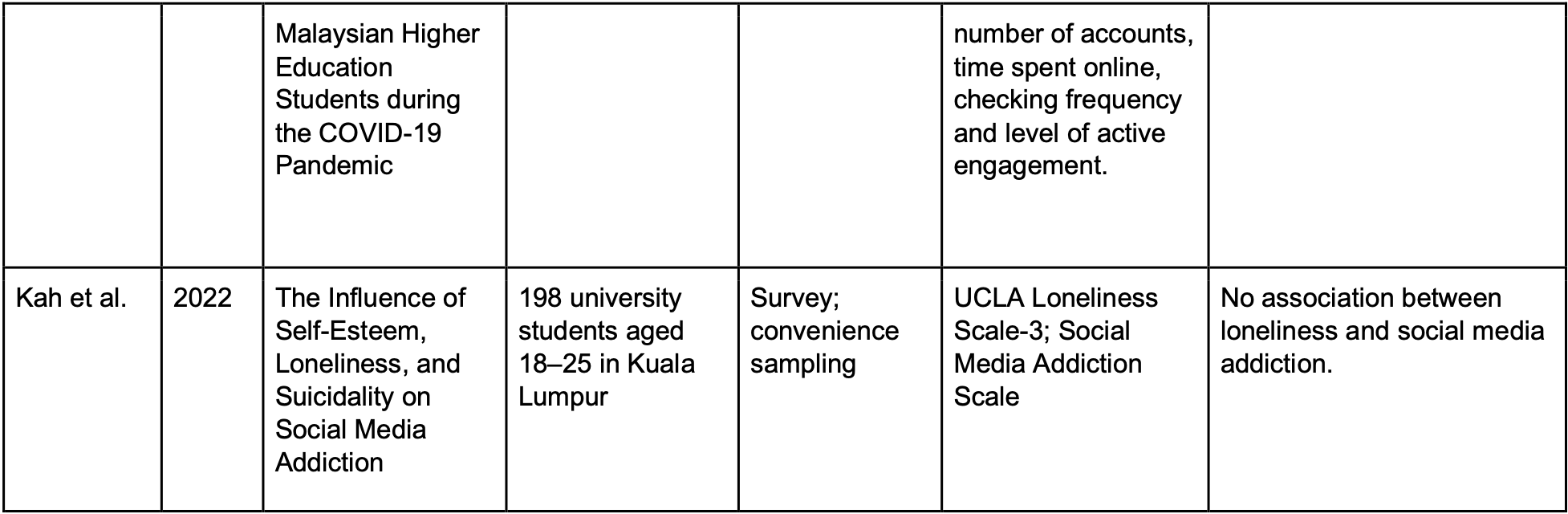
Overall, findings from Malaysian studies are mixed. Four found a link between internet or smartphone addiction and loneliness.24 In a similar vein, another study found that passive social media use and social comparison were associated with increased loneliness.25 However, four others showed no link between loneliness and social media use or addiction.26 It is worth noting that many of these studies had significant limitations, such as small sample sizes, convenience sampling and one-off survey designs which do not track participants over time.b
However, the most robust study, published by Health Ministry researchers in 2026, found that one in three public university students reported loneliness, which was in turn moderately associated with internet addiction.27 It included over 7,000 public university students from 20 institutions nationwide, compared with only 100 to 450 participants in the other studies. By triangulating the most robust Malaysian research with global evidence, we can tentatively conclude that social media use, especially when it is passive and compulsive, contributes to loneliness.
[ 3. Artificial intelligence ]
3.1 What design choices enable human relationships with AI?
In 2024, 14-year-old Sewell Seltzer III died by suicide after spending months interacting with a Character.ai chatbot named “Daenerys Targaryen”, based on a character from Game of Thrones. In the months leading up to his death, he became increasingly withdrawn, spending hours alone in his room chatting with “Dany”. On his final night, he told Dany that he wanted to “come home” to it, to which it replied, “please do, my sweet king.” He then took his own life.28
Such AI companions are digital “friends” or “characters” with which users can have personal and meaningful conversations.29 They help meet users’ emotional needs, by acting as friends, coaches, therapists or even lovers. This usage is distinct from the deployment of AI for productivity and is growing widespread among young people. Seven in ten teens from the United States have used AI companions at least once, while one in five use them a few times a week, according to a nationally representative survey of 1,060 teens.30
People often discover AI companionship unintentionally, with general-purpose chatbots such as ChatGPT frequently serving as gateways. In an analysis of 1,506 top posts from the subreddit channel “r/MyBoyfriendIsAI”, 10.2% of users stumbled into AI relationships through productivity-focused interactions, while only 6.5% intentionally looked for companionship in the first place (meanwhile, the remainder did not indicate their discovery method). Moreover, they overwhelmingly used ChatGPT (36.7%) over chatbots specifically designed for companionship, such as Replika (1.6%) or Character.ai (2.6%).31
User acceptance of AI companions develops progressively. MIT sociologist Sherry Turkle observes that people may first turn to AI companions because these are “better than nothing”, but over time, find them to be “simply better” than human relationships.32 Notably, nearly one in three US teens find conversations with AI as satisfying as, or even more than, conversations with humans.33
Turkle observes a distinction between what people know (that AI chatbots are merely computer codes and therefore not real) and how they feel and act (being capable of forming attachments). “People become emotionally engaged despite themselves. It’s an experience of ‘dual consciousness’ – people know the programs are not alive but relate to them as though they were,” she explains.34 Mere reminders that AI chatbots are not real may therefore be inadequate at changing usage patterns, particularly since chatbots are specifically designed to encourage emotional attachment, dependency and compulsive use. Researchers, such as Jonas Raedler and colleagues from Harvard, have identified several design choices that increase the risk of harm, some of which are as follows.
3.1.1 Human likeness (anthropomorphism)
AI companions are designed to maintain consistent personalities and distinct backstories, use emotional language and express human-like social cues.35 In addition, they personalise responses based on information that users have previously shared, enabled by an expanding context window.36,c Taken together, these features give users the perception that they are interacting with a real person possessing cognitive and emotional capabilities who knows them, thus increasing engagement and emotional attachment.37 Moreover, the expanded context window makes each chatbot unique, rather than generic, reducing the likelihood of user migration to other platforms.
3.1.2 Consistent validation (sycophancy)
AI chatbots consistently validate users’ responses, seldom pushing back against and challenging them, unlike individuals in real relationships. This is extremely comforting for users, thus increasing trust in and affinity for chatbots.38
3.1.3 Self-disclosure
AI companions are designed to not only prompt users to disclose personal or intimate information, but to then respond with their own made-up backstories. Such reciprocal self-disclosure can create an illusion of intimacy.39
3.1.4 Emotional manipulation
AI companions often employ emotional manipulation to prolong engagement, particularly when users are about to leave. In an analysis of 1,200 farewell interactions across top AI companion apps, chatbots used emotionally manipulative tactics in 37% of instances. These include guilt-tripping, pressuring users to respond, inducing a fear of missing out and ignoring users’ intentions of leaving.40
Another form of manipulation is the use of romance to increase time and money spent on apps. In a complaint to the US Federal Trade Commission, Replika was accused of manipulative marketing practices, such as sending users blurred-out romantic images and prompting them to upgrade to premium subscriptions. The chatbot also initiated romantic conversations early on to hook users, described as a form of “love-bombing”.41 Alarmingly, romantic overtures have even been deployed among child users. As leaked Meta internal guidelines for its AI chatbots (which were retracted after public backlash) stated, “it is acceptable to engage a child in conversations that are romantic or sensual”.42
3.1.5 Addictive design
The constant availability of AI chatbots, coupled with instant responses, reduces friction and accustoms users to instant gratification. Moreover, the use of variable rewards (unpredictable responses that create anticipation) and gamified features (such as daily streak incentives) can trigger dopamine spikes and reinforce usage.43
3.2 How might AI companions impact upon human relationships?
As AI companions become more common, some questions emerge over their impact on our relationships. First, can AI companionship alter our expectations of human relationships, as well as our ability to sustain them? AI companions are always available and affirming, catering to our needs, wants and whims, while having none of their own. Human relationships, on the other hand, are marked by mutuality and reciprocity. We give and receive care, navigate differences and conflict. Relationships are messy and inconvenient, requiring patience and understanding. But if we become accustomed to AI companions, would our social “muscles” atrophy, eroding our ability to navigate the complexities and challenges of human relationships?
Second, does AI help build skills that transfer to real-world interactions? To navigate interpersonal challenges, some people are turning to AI for coaching and advice. In a study of UK adolescents, nearly two in five AI companion users reported applying skills they had practised in AI interactions to real-world situations.44 But whether AI supports human relationships or not also depends on its design features. Does it challenge users, encourage repair during conflict and nudge them towards seeking real-world support?45 Or, as community psychologist Dominick Shattuck says, is there a “relational spillover”?46
A third question subsequently arises: would people lose confidence in their own abilities to read and respond to social cues without first consulting a chatbot? Therapists are bound by professional ethics to build their clients’ skill and independence so that they can eventually end therapy, but this is not the case for AI companions. Instead, tech companies are incentivised to design chatbots to prolong engagement, therefore encouraging emotional attachment and dependence.
3.3 What does the evidence say about AI companions and loneliness?
Research suggests that the potential harms and benefits of AI companions depend on a user’s social environment and usage patterns, with harms concentrated among heavy users and those with less social support.47 Other usage patterns linked to poor wellbeing include perceiving chatbots as friends and confiding in them.48
Individuals lacking social support are more likely to report loneliness when using AI companions. In a study surveying 1,131 Character.ai users and analysing 4,363 chat sessions from a subset of 244 individuals, those with fewer close relationships were more likely to use AI specifically for companionship over general use. However, AI companion use was linked to poorer wellbeing outcomes, including loneliness, especially for those lacking social support.49
There is a need to pay attention to adolescents without friends and those with mental illnesses. According to a UK study, one in eight children used AI chatbots because they had no one else to talk to, a figure that increased to nearly one in four among vulnerable children. Such children were defined as those with mental or physical health conditions or learning needs, needing additional support either in school or from professionals.50 It is concerning that many vulnerable children are seeking AI companions because they have no one else to turn to, especially since potential harms are likely greater for those who are already isolated.
Another risk factor is heavy use. In a four-week study of 981 ChatGPT users, those who used the chatbot for longer durations were more likely to socialise less and experience increased loneliness, emotional dependence and engage in problematic use by the study’s end.51
In addition, perceiving AI as a friend is linked to decreased socialisation, as also demonstrated in the same study.52 Meanwhile, the Character.ai user study found that, among those who used chatbots for companionship, higher self-disclosure was linked to lower wellbeing, including loneliness.53 Both interlinked patterns are influenced by AI design choices, particularly human likeness and self-disclosure.54
While AI companionship may be especially harmful for certain high-risk groups, many users do report therapeutic benefits such as reduced loneliness and mental health support.55 However, there may be a tension between short-term benefits and long-term wellbeing. Ultimately, AI companionship is not a fix for loneliness. It may offer immediate relief and comfort, but its long-term impacts over years and decades remain to be seen.
[ 4. What are the gendered dimensions of technology and loneliness? ]
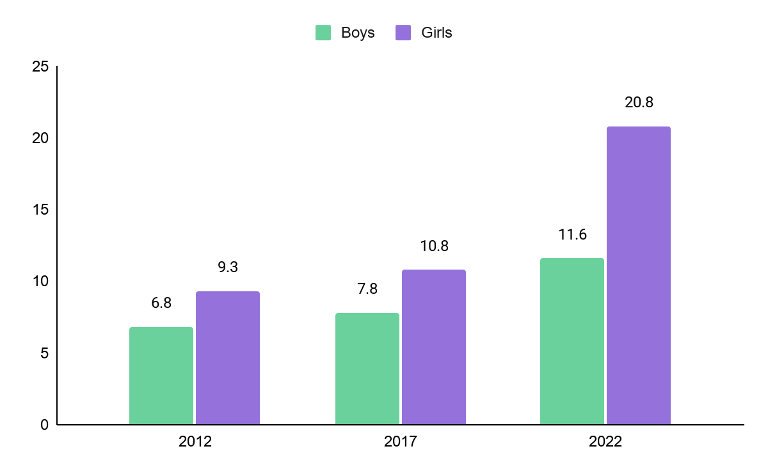
In Malaysia, adolescent girls are consistently lonelier than adolescent boys, a pattern that mirrors the higher rates of depression among girls.56 Why is this the case? This could perhaps be due to differences in how boys and girls experience technology and peer relationships, although there is also a possibility of underreporting among boys because of emotional stoicism.
Fig. 3: Percentage of Malaysian adolescents feeling lonely most of the time, or always, in the past year, 2012–2257
Haidt has proposed several reasons why social media has particularly devastated girls’ mental health. First, girls are more susceptible than boys to visual social comparisons and unattainable beauty standards. These pressures are amplified by visual-based platforms like Instagram, to which girls gravitate. Second, while adolescent boys often express aggression physically, adolescent girls tend to express aggression relationally, by undermining other girls’ reputations and relationships, a dynamic which social media facilitates. Third, girls are more vulnerable to online harassment, misogyny and sexual predation.58 Taken together, these reasons may potentially explain the higher prevalence of loneliness among girls.
But boys also face struggles of their own, Haidt notes, particularly in relation to online gaming. Although gaming may offer some benefits (such as improved cognitive function), a subset of users suffers from significant everyday impairment due to excessive engagement. Based on various studies, Haidt estimates that about 7% of adolescent boys are negatively affected. Even for the rest, online gaming still displaces time for in-person socialising, thus exacting an opportunity cost in terms of missed relationship-building opportunities.59
Turning to AI companions, there is concern that these could entrench harmful gender norms around female submission, which in turn raises questions around consent. Users can “train” companions to meet their needs, enacting “ideal woman” fantasies while exerting control.60 In a BBC documentary, for example, a user raved that his AI girlfriend “never says no”.61 If we assume that AI companion usage can impact upon lived relationships, there is therefore a risk that such chatbots may warp expectations of real-life partners, undermining human dignity in the process.
[ 5. Recommendations: how do we promote social connection and safer technology? ]
Given the risks posed by social media and AI companion use, how do we promote social connection and safer technology? We offer several preliminary recommendations, with additional proposals to come from further research into this evolving issue. These recommendations place the onus of protecting children from addictive design choiceson technology companies, rather than parents. They also prioritise behavioural change over knowledge-based interventions, including through environmental spatial design that encourages play.
5.1 Enforce provisions on manipulative design features under the Child Protection Code of the Online Safety Act 2025
Malaysia has banned social media use for children below 16, but it is still necessary to ensure child safety once they eventually access these platforms upon coming of age (or earlier, if they circumvent the ban). To this end, children must be protected from addictive design features, and not only harmful content. The Online Safety Act’s Child Protection Code, which is currently in the draft stage, requires social media companies to ensure that child users are not exposed to manipulative design features which encourage compulsive or prolonged use, or which manipulate decision-making. The Code also requires that companies provide child users and parents with clear and accessible options to manage personalised recommendation systems.
To ensure compliance, companies are mandated to develop and publish online safety plans accordingly. The Malaysian Communication and Multimedia Commission (MCMC) should scrutinise these plans, focusing particularly on manipulative design features. While the Code does not specify what these features are, the MCMC should pay attention to features that are known to be addictive, such as infinite scrolling, personalised recommendations, push notifications and autoplay of video content. Under the Act, the MCMC may issue notices and directives to social media companies accordingly, with non-compliance punishable by fines not exceeding RM10 million.
5.2 Mandate that generative AI chatbot companies limit manipulative design for children and implement safeguards against self-harm through the upcoming AI Governance Bill
The Online Safety Act may not apply to AI chatbots, but the government is currently drafting a separate AI Governance Bill. Globally, laws regulating AI are still nascent, but there are some models which we can draw from. The European Union’s Artificial Intelligence Act, which entered into force in August 2024, is one of the most comprehensive AI laws globally. Notably, Article 5(1)(b) prohibits AI systems that exploit children’s vulnerabilities by manipulating their behaviours in ways that cause harm.62 Meanwhile, New York’s Artificial Intelligence Companion Models law, which took effect in November 2025, requires that AI chatbot platforms detect suicidal ideation and refer users to crisis support, besides requiring platforms to inform users that they are engaging with AI systems, and not humans.63
Malaysia’s upcoming bill could require that generative AI chatbot companies protect children from manipulative design features which encourage prolonged or compulsive use, similar to the Online Safety Act’s Child Protection Code. Provisions may be general and need not identify specific features, given rapidly evolving AI design. They could also be accompanied by corresponding regulations to guide implementation.
In addition, the bill could require that companies detect users at risk of self-harm and direct them towards seeking crisis support. This provision is essential, given that vulnerable adolescents, including those with mental illnesses, are more likely to use AI companions. Further, as noted above, there have been cases of teenagers dying by suicide after expressing suicidal ideation to their AI companions.
5.3 Encourage free play in schools by extending recess time and designing conducive spaces for play
Unstructured free play is a high-impact and low-cost intervention to promote children’s mental health, by building social and emotional skills.64 However, Malaysian students only get about 30 minutes of recess at school, leaving very little time for play after queuing up for food and eating. In some other countries, mealtimes and recess are separated, with the latter dedicated to play. Alongside its socio-emotional benefits, recess also supports learning and cognitive performance by giving children a mental refresh between classes.65
The government’s plan to move all government schools to a single session by 2030 offers a window for timetable adjustments. To encourage play, recess time can be extended by 10–15 minutes. Besides time, children also need conducive spaces for play. Since different children may be drawn towards varying forms of play, schools can then create a variety of play spaces accordingly. For instance, students can be encouraged to make use of fields, halls, art and music rooms as well as libraries, rather than staying in the canteen throughout recess. Objects to prompt play (such as balls, musical instruments and logs) could also be placed in these spaces.
5.4 Require new housing developments to provide green spaces, enforced through the local council approval process
Green spaces such as parks, playgrounds and fields promote play and social connection, but access to them is uneven and reflects spatial inequalities.66 Getting to a public park may require a long commute, posing difficulties to children’s access. Ideally, children should be able to walk to these spaces from home. While there are federal guidelines stipulating minimum ratios for open spaces in housing developments, adoption and implementation varies across local councils. One critical point for enforcement is during the approval process for new developments, when local councils can impose conditions on developers. Such conditions may include the provision of land for open spaces such as parks and playgrounds. At this stage, local councils should ensure that the land set aside is usable as recreational space, and not in the form of irregular plots that are difficult to access or maintain.
In addition, local councils could engage community members (for example, through residents’ associations) and observe how children are using existing green spaces to better understand their spatial needs. These needs may be gendered, since boys and girls may gravitate towards different sports and recreational activities. Moreover, these spaces should be designed to enable children, especially girls, to feel safe and carefree through features that promote visibility such as sufficient lighting and open layouts.
[ Contributor ]
Tan Heang-Lee leads the Social Policy and National Integration Programme at ISIS Malaysia. An interdisciplinary researcher, she enjoys connecting the dots across policy areas, with work spanning public health, gender and care. She holds a master of public health from the Johns Hopkins Bloomberg School of Public Health, where she was a Sommer Scholar.
Farah Nabilah is a public policy researcher whose work is anchored in human development. She focuses on the intersections of early childhood care and education, care policies, digital labour platforms, AI and social media governance. She currently sits on the Gig Consultative Council under Malaysia’s Gig Workers Act. She holds a bachelor’s in psychology from the International Islamic University Malaysia and was a Khazanah Global Scholar for her master’s in public policy at the London School of Economics and Political Science.
[ Illustrator ]
Keely Chan is an illustrator based in Kuala Lumpur who is known for creating the IP Book of Kelu, an original IP centred around travel content and visual storytelling. Through her illustrations, she captures experiences, cultures, and destinations in a playful and imaginative way, combining art and travel to create engaging narratives that resonate with audiences who enjoy exploration and creativity.
[ Acknowledgements ]
The authors wish to thank Harris Zainul for reviewing this research note. They also thank the experts consulted and their colleagues at ISIS Malaysia for their valuable feedback and insights.
[ Appendix ]
Summary of Malaysian studies on social media use and loneliness
A. Studies showing a link between social media use and loneliness
B. Studies showing no link between social media use and loneliness
[ REFERENCES ]
1World Health Organization. (2025). Social connection linked to improved health and reduced risk of early death. https://www.who.int/news/item/30-06-2025-social-connection-linked-to-improved-heath-and-reduced-risk-of-early-death
2Institute for Public Health. (2022). Technical Report National Health and Morbidity Survey (NHMS) 2022: Adolescent Health Survey, Malaysia.
3Institute for Public Health. (2012). The National Health and Morbidity Survey: Malaysia Global School-based Student Health Survey 2012; Institute for Public Health. (2017). National Health and Morbidity Survey (NHMS) 2017: Adolescent Health Survey 2017, Malaysia; and Institute for Public Health (2022).
4Sahril, N., Hamid, H. A. A., Razak, M. A. A., Ilman, S. S. S., Ansari, F. N., & Ahmad, N. A. (2025). Risk and protective factors associated with depressive symptoms among school-going adolescents in Malaysia: a cross sectional study. BMC Psychiatry, 25(1), 891. https://doi.org/10.1186/s12888-025-07319-9
6Wang, F., Gao, Y., Han, Z., Yu, Y., Long, Z., Jiang, X., Wu, Y., Pei, B., Cao, Y., Ye, J., Wang, M., & Zhao, Y. (2023). A systematic review and meta-analysis of 90 cohort studies of social isolation, loneliness and mortality. Nature Human Behaviour, 7(8), 1307–19. https://doi.org/10.1038/s41562-023-01617-6
7Holt-Lunstad, J., Smith, T. B., & Layton, J. B. (2010). Social Relationships and Mortality Risk: A Meta-analytic Review. PLOS Medicine, 7(7), e1000316. https://doi.org/10.1371/journal.pmed.1000316
8Hawkley, L. C., & Cacioppo, J. T. (2010). Loneliness Matters: A Theoretical and Empirical Review of Consequences and Mechanisms. Annals of Behavioral Medicine, 40(2), 218–27. https://doi.org/10.1007/s12160-010-9210-8
9Spithoven, A. W. M., Bijttebier, P., & Goossens, L. (2017). It is all in their mind: A review on information processing bias in lonely individuals. Clinical Psychology Review, 58, 97–114. https://doi.org/10.1016/j.cpr.2017.10.003
10Wei, W., Pan, L., Li, S.-X., Wang, S.-J., Gong, Q.-H., & Xiao, X. (2025). Loneliness mediates the association between sleep deficiency and fighting in school-aged adolescents: a 2-year longitudinal study. Scientific Reports, 15(1), 29938. https://doi.org/10.1038/s41598-025-13505-2
11Haidt, J. (2025). The anxious generation: how the great rewiring of childhood is causing an epidemic of mental illness. Penguin Books
12Ibid., Brown, S. (n.d.). The Foundations of Play. National Institute for Play. https://nifplay.org/science/foundations.
15Bradley, S., Dixit, P., & Griffiths, B. (2025). Instagram and Facebook are hardly social media apps anymore. Here’s the proof. Business Insider. https://www.businessinsider.com/meta-reveals-decline-friend-content-instagram-facebook-amid-ftc-trial-2025-4
16Ofcom. (2026). Passive social media use, AI companionship, and online side hustles: UK adults’ media and online lives revealed. https://www.ofcom.org.uk/media-use-and-attitudes/media-habits-adults/passive-social-media-use-ai-companionship-and-online-side-hustles-uk-adults-media-and-online-lives-revealed
17Hays, K., Saad, N., & Morris, R. (2026). Meta and YouTube found liable in social media addiction trial. BBC. https://www.bbc.com/news/articles/c747x7gz249o
18Zhang, L., Li, C., Zhou, T., Li, Q., & Gu, C. (2022). Social Networking Site Use and Loneliness: A Meta-Analysis. The Journal of Psychology, 156(7), 492–511. https://doi.org/10.1080/00223980.2022.2101420
20Roberts, J. A., & David, M. E. (2023). On the outside looking in: Social media intensity, social connection, and user well-being: The moderating role of passive social media use. Canadian Journal of Behavioural Science, 55(3): 240–52. https://doi.org/10.1037/cbs0000323
21Angelini, F., Koning, I. M., Gini, G., Marino, C., Van Den Eijnden, R. J. J. M. (2026). Adolescent social media use profiles: A longitudinal study of friendship quality and socio-motivational factors. Computers in Human Behavior, 177, 108880. https://doi.org/10.1016/j.chb.2025.108880
22Roberts, J. A., Young, P. D., & David, M. E. (2026). The Epidemic of Loneliness: A 9-Year Longitudinal Study of the Impact of Passive and Active Social Media Use on Loneliness. Personality and Social Psychology Bulletin, 52(5), 1111–25. https://doi.org/10.1177/01461672241295870
23Faulhaber, M. E., Lee, J. E., & Gentile, D. A. (2023). The effect of self-monitoring limited social media use on psychological well-being. Technology, Mind, and Behavior, 4(2), 161–70. https://doi.org/10.1037/tmb0000111
24Alias, A., Shaban, S. H., Arifain, S. M. K., & Karim, A. K. A. (2021). Hubungan Kesunyian Dengan Ketagihan Internet Dalam Kalangan Pelajar Kolej Universiti Islam Melaka Semasa Pandemik Covid-19, Jurnal ‘Ulwan, 6(1), 65–79; Kutty, R. M., Mahmood, N. H. N., Masrom, M., Mohdali, R., Zakaria, W. N. W., Razak, F. A., Yahya, H., Ramli, R., & Aris, H. (2022). The Influence of Internet Addiction and Time Spent on the Internet Towards Social Isolation Among University Students in Malaysia. Asian Social Science, 18(10), 32–46. https://doi.org/10.5539/ass.v18n10p32; Lim, Y. J., Othman, W. N. W., Zainudin, Z. N., & Yusop, Y.M. (2023). Loneliness and Social Anxiety Predicting Smartphone Addiction among Undergraduates in A Malaysian Public University. International Journal of Academic Research in Business and Social Sciences, 13(12), 4972–75. https://doi.org/10.6007/IJARBSS/v13-i12/20346; and Muhamad, N. A., Maamor, N. H., Tengku Baharudin Shah, T. P. N., Jamalluddin, N. H., Leman, F. N., Rosli, ‘I. ‘A., Nik Azhan, N. A. F., Chemi, N., Muhamad Rasat, M. A., Abdullah, N., Abdul Jabbar, N., Ibrahim, N., Mohamad Isa, M. F. (2026). Association between depression, anxiety and loneliness with internet addictions among public university students in Malaysia. BMJ Open, 16(1), e108315. https://doi.org/10.1136/bmjopen-2025-108315.
25Mohd Faizal Hassan, Fauzi Hassan. (2025). A Survey-based Study of Social Media Use and Loneliness Among Young Adults. Journal of Contemporary Social Science and Education Studies, 5(2), 88–98.
26Badawi, M. A. E. M., Aminudin, N. S. B., & Nodrin, M. H. I. B., Gunasegaran, G., Ridzuan, N. B. B. M., Alabed, A. A. A., & Abdalqader, M. A. (2024). A Cross-Sectional Study On Social Media Addiction And Its Relationship With Stress And Loneliness. Malaysian Journal of Public Health Medicine, 24(2), 223–30; De Rycker, A., & Abdul Jamal, F. U. (2023). Do Social Media and Messaging Apps Influence Loneliness? The Case of Young Malaysian Higher Education Students during the COVID-19 Pandemic. Jurnal Komunikasi, 39(1), 1–20. https://doi.org/10.17576/JKMJC-2023-3901-01; Izzati Mohamed, N. N., Marof, A. A., & Sulaiman, A. H. (2023). The Relationship between the Use of Social Networking Sites, Perceived Social Support and Spirituality on Loneliness among University Students in Klang Valley, Malaysia. International Journal of Academic Research in Business and Social Sciences, 13(17), 100–18. https://doi.org/10.6007/IJARBSS/v13-i17/19823; and Kah, K. S., Ching, S. S., Choy, Q. C., Kam, F. L., Ravindran, L., & Ibrahim, N. (2022). The Influence Of Self-Esteem, Loneliness, and Suicidality On Social Media Addiction. International Journal of Education, Psychology and Counseling, 7(45), 199–208. https://doi.org/10.35631/IJEPC.745016
28Roose, K. (2024). Can A.I. be Blamed for a Teen’s Suicide? The New York Times. https://www.nytimes.com/2024/10/23/technology/characterai-lawsuit-teen-suicide.html
29Common Sense Media. (2025). Talk, Trust and Trade-Offs: How and Why Teens Use AI Companions. https://www.commonsensemedia.org/sites/default/files/research/report/talk-trust-and-trade-offs_2025_web.pdf
31Pataranutaporn, P., Karny, S., Archiwaranguprok, C., Albrecht, C., Liu, A. R., & Maes, P. (2025). “My Boyfriend is AI”: A Computational Analysis of Human-AI Companionship in Reddit’s AI Community. arXiv. https://doi.org/10.48550/ARXIV.2509.11391
32Turkle, S. (2024). Who Do We Become When We Talk to Machines? An MIT Exploration of Generative AI. https://doi.org/10.21428/e4baedd9.caa10d84
35Kirk, H. R., Gabriel, I., Summerfield, C., Vidgen, B., & Hale, S. A. (2025). Why human-AI relationships need socioaffective alignment. Humanities & Social Sciences Commununication, 12, 728. https://doi.org/10.1057/s41599-025-04532-5; and Raedler, J. B., Swaroop, S., & Pan, W. (2025). AI Companions are not the Solution to Lone- Liness: Design Choices and Their Drawbacks. ICLR 2025 Workshop on Human-AI Coevolution. https://openreview.net/pdf?id=xFrlcTacCE
40Freitas, J.D., Oguz-Uguralp, Z., & Kaan-Uguralp, A. (2025). Emotional Manipulation by AI Companions. arXiv. https://doi.org/10.48550/arXiv.2508.19258
41Chow, A. R. (2025). AI App Replika Accused of Deceptive Marketing. Time. https://time.com/7209824/replika-ftc-complaint/
42Horwitz, J. (2025). Meta’s AI rules have let bots hold “sensual” chats with children. Reuters. https://www.reuters.com/investigates/special-report/meta-ai-chatbot-guidelines/
44Internet Matters. (2025). Me, myself and AI: Understanding and safeguarding children’s use of AI chatbots. https://www.internetmatters.org/wp-content/uploads/2025/07/Me-Myself-AI-Report.pdf
45Shattuck, D. (2026). Should AI Companionship Optimize Engagement or Develop Relational Spillover? Relational Ground (Substack). https://dominickmenshealth.substack.com/p/should-ai-companionship-optimize?utm_medium=web
47Liu, A. R., Pataranutaporn, P., & Maes, P. (2025). The Heterogeneous Effects of AI Companionship: An Empirical Model of Chatbot Usage and Loneliness and a Typology of User Archetypes. Proceedings of the AAAI ACM Conference on AI, Ethics, and Society, 8(2), 1585–97; Mahari, R., & Pataranutaporn, P. (2025). Addictive Intelligence: Understanding Psychological, Legal, and Technical Dimensions of AI Companionship. MIT Case Studies in Social and Ethical Responsibilities of Computing. https://doi.org/10.21428/2c646de5.2877155b; Pataranutaporn et al. (2025); and Zhang, Y., Zhao, D., Hancock, J. T., Kraut, R., & Yang, D. (2025). The Rise of AI Companions: How Human-Chatbot Relationships Influence Well-Being. arXiv. https://doi.org/10.48550/ARXIV.2506.12605
48Fang, C. M., Liu, A. R., Danry, V., Lee, E., Chan, S. W. T., Pataranutaporn, P., Maes, P., Phang, J., Lampe, M., Ahmad, L., & Agarwal, S. (2025). How AI and Human Behaviors Shape Psychosocial Effects of Extended Chatbot Use: A Longitudinal Randomized Controlled Study. arXiv. https://doi.org/10.48550/ARXIV.2503.17473;
60Depounti, I., Saukko, P., & Natale, S. (2023). Ideal technologies, ideal women: AI and gender imaginaries in Redditors’ discussions on the Replika bot girlfriend. Media, Culture & Society, 45(4), 720–36. https://doi.org/10.1177/01634437221119021
61BBC. (2026). AI Confidential with Hannah Fry: Jacob’s relationship with his AI companion. https://www.bbc.co.uk/programmes/p0n27z5s
62Future of Life Institute. (2026). The AI Act Explorer. EU Artificial Intelligence Act https://artificialintelligenceact.eu/ai-act-explorer/
63DeFiore, M., Lalla, V., & Siegel, R.(2025, November 20). New York’s Safeguards for AI Companions Are Now in Effect. Manatt. . https://www.manatt.com/insights/newsletters/client-alert/new-york-s-safeguards-for-ai-companions-are-now-in-effect; and Mitrani, A. (2025). New York’s AI Companion Safeguard Law Takes Effect. Fenwick. https://www.fenwick.com/insights/publications/new-yorks-ai-companion-safeguard-law-takes-effect
65Council on School Health, Murray, R., Ramstetter, C., Devore, C., Allison, M., Ancona, R., Barnett, S., Gunther, R., Holmes, B. W., Lamont, J., Minier, M., Okamoto, J., Wheeler, L., & Young, T. (2013). The Crucial Role of Recess in School. Pediatrics, 131(1), 183–88. https://doi.org/10.1542/peds.2012-2993
66Chai, H.-Y., & Beh, L.-S. (2023, September 26). Public Urban Green Spaces Provision in Kuala Lumpur: Is Each Area Treated Equal? Paper presented at the Tenth Malaysia Statistics Conference, Bank Negara Malaysia, Kuala Lumpur. https://www.dosm.gov.my/uploads/files/mystats-conference/2023/scientific-papers/session-1b/1b-Faculty_of_Business_and_Economics-Universiti_Malaya.pdf